
비전“Vision”
- Global Leader in Chinese Studies – 교육(Education)
- 국제적네트워크(International Networks)
- 학술·연구(Academoc Research)
- 중국 최신정보(Up-to-Date Information)
- 한·중관계 발전(Enhancement of Bilateral relations between Korea and China)
목표“Mission”
- 국내 최고의 중국관련 연구성과물 축적(Best Research Center for Chinese Studies)
- 최신정보 및 인적네트워크 구축(Up-to-Date Information and Premier Network)
- 지역 발전을 위한 첨단 교육프로그램 제공(High Tech Education for Development of Busan)
Emerging Research Areas
| Leading Research Center for Chinese Studies | Global Collaboration | Trustworthy AI-Based Digital Culture |
|---|---|---|
| Accumulating the best research outputs on Chinese studies in the country, providing valuable insights on Chinese society, economy, politics, and culture. | Building and maintaining a premier network of experts and scholars, providing up-to-date information, and fostering international cooperation to enhance the relevance and impact of our research | Leveraging AI for content creation, management, and distribution in the cultural industry, enhancing global competitiveness and accessibility |
| Trustworthy AI-Based Smart Tourism | Trustworthy AI-Based Autonomous Manufacturing | Trustworthy AI-Based Digital Finance |
| Personalizing tourist experiences, increasing operational efficiency, and enhancing safety in the tourism industry through AI | Improving automation and productivity in manufacturing through reliable AI systems, ensuring precise quality control and cost reduction | Enhancing the efficiency, security, and user experience of financial services through AI, ensuring transparent and reliable financial transactions. |
AI Transformation
Artificial intelligence (AI) is often heralded as a means for organizations to reduce costs while enhancing service quality, coordination, productivity, and operational efficiencies (Davenport, 2018; Iansiti and Lakhani, 2020). AI technologies are increasingly integrated into diverse organizational practices, forming new human-machine configurations and playing a significant role in contemporary organizational dynamics
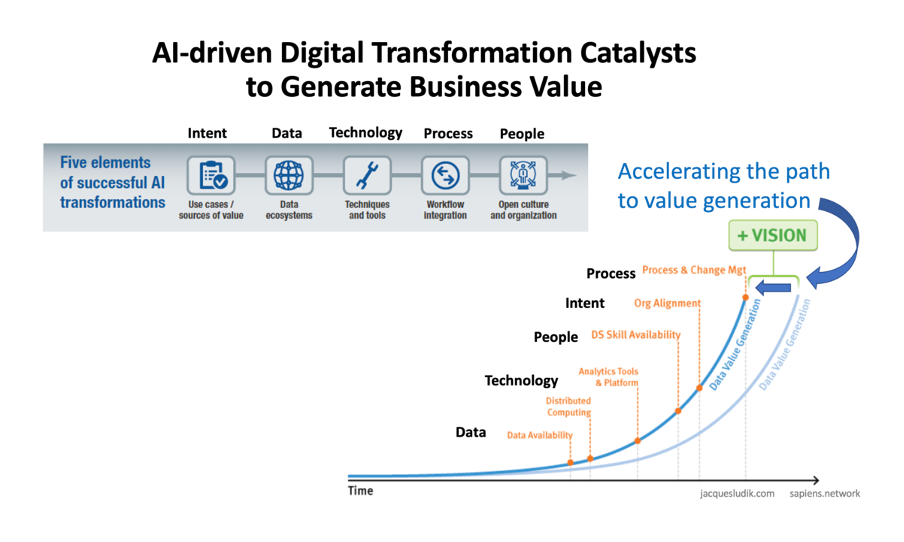
< Figure 1 >
Elements and phases necessary for successful AI transformations (Jacobs, 2024).
AI Trustworthiness
Trustworthiness in artificial intelligence (AI) encompasses the assurance that AI systems operate in ways that are reliable, ethical, and aligned with societal values. The concept of trustworthy AI is crucial as AI systems become increasingly integrated into critical aspects of society, including healthcare, finance, autonomous vehicles, and more.
AI trustworthiness plays a crucial role in the successful integration of AI into society. It ensures that AI systems operate within ethical boundaries and meet societal expectations. The role of AI trustworthiness includes:
- 1) Ensuring Ethical Compliance: By adhering to ethical principles, trustworthy AI systems prevent discrimination and ensure equitable treatment of all individuals.
- 2) Building Public Confidence: Trustworthy AI fosters public confidence, encouraging the acceptance and adoption of AI technologies across various sectors.
- 3) Facilitating Regulatory Adherence: Trustworthy AI systems help organizations comply with regulatory requirements, reducing the risk of legal repercussions.
- 4) Enhancing Business Value: Companies that deploy trustworthy AI systems can differentiate themselves as ethical and responsible, enhancing their brand value and customer loyalty.
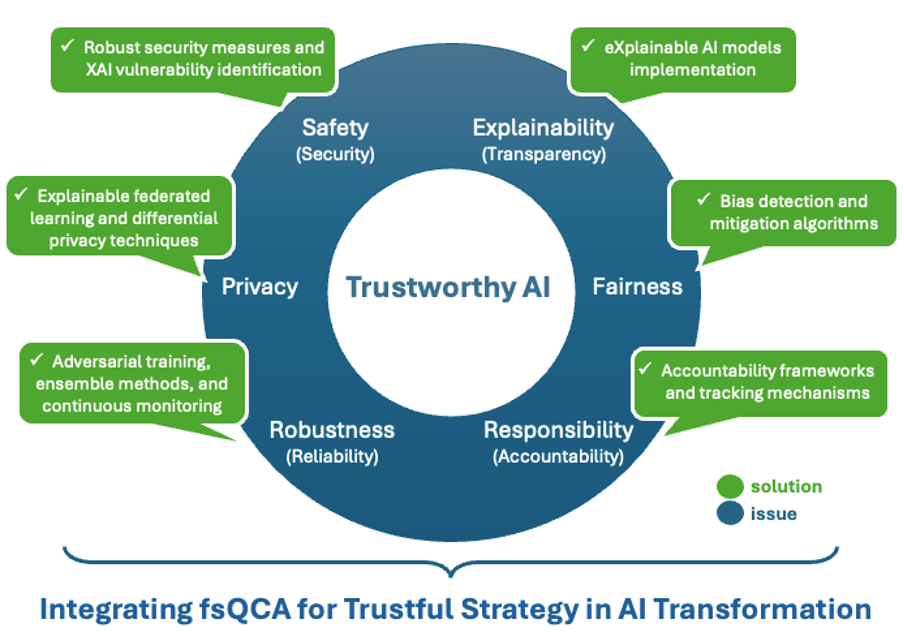
< Figure 2 >
Key dimensions of Trustworthy AI